



Most people don’t fail at self-improvement because they lack willpower. They fail because they juggle five or six systems at once — a productivity app, a fitness tracker, a meditation habit, a budgeting spreadsheet, a sleep routine — and none of these systems talk to each other. You optimize one area. Two others quietly fall apart.
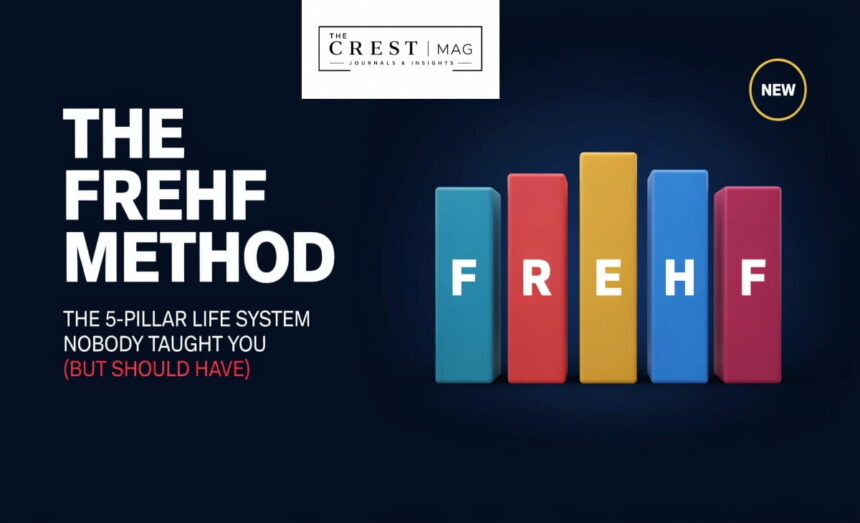
The FREHF method solves this problem with one simple structure. It stands for Focus, Rest, Exercise, Health, and Fulfillment. These five pillars work together. They don’t compete for your time. When you balance them as one system, they reinforce each other instead of pulling in different directions.
This isn’t a diet plan. It’s not a productivity hack or a 30-day challenge. It’s a way to see your daily life as one connected system, not five separate projects. Below, you’ll find a full breakdown of each pillar, why it matters, how it connects to the others, and how to start today.
Quick Facts Table
| Pillar | Stands For | Core Focus | Biggest Mistake People Make |
| F | Focus | Deliberate attention on one task | Multitasking instead of single-tasking |
| R | Rest | Sleep + true downtime | Treating rest as a reward, not a need |
| E | Exercise | Daily movement + strength work | All-or-nothing workout mindset |
| H | Health | Nutrition, checkups, mental health | Ignoring small habits until symptoms appear |
| F | Fulfillment | Meaning, relationships, purpose | Chasing productivity with no “why” |
Why Most Self-Improvement Systems Fail
Popular self-improvement approaches usually isolate one dimension of life. Productivity systems obsess over time management. They ignore the body completely. Fitness programs demand energy and recovery time. They rarely ask whether a stressful job leaves you any energy to give. Wellness content talks endlessly about mindset. It says almost nothing about sleep debt or physical exhaustion — both of which quietly sabotage that same mindset work.
The result feels like a constant whack-a-mole cycle. You dial in your workouts, but your focus at work collapses because recovery sleep never happens. You fix your sleep, but now you lose time for the people and hobbies that make life worth living. Each fix creates a new gap somewhere else.
FREHF starts from a different idea. These five areas aren’t competing priorities. They’re inputs and outputs of one single system. Improve one area correctly, and the others get easier. Neglect one area, and the rest become harder to sustain — no matter how much effort you throw at them.
F — Focus
Focus means directing your attention deliberately toward something that matters. It’s not the same as staying busy. You can spend eight hours “working” and produce almost nothing of value, because notifications, half-finished tasks, and low-value busywork scattered your attention the entire time.
Three things build real focus: a clear target, a protected environment, and enough underlying energy to sustain concentration. That third factor depends heavily on the next four pillars. Focus often breaks down first when rest or health suffer. That’s why focus-only fixes — blocking apps, timers, elaborate to-do systems — often fail on their own. They treat a symptom, not the cause.
Try this simple practice: each morning, pick one task that would make the day feel successful, even if nothing else gets done. Give it the first uninterrupted block of your day, before you check messages or sit through meetings.
R — Rest
Rest doesn’t mean doing nothing. It means deliberately recovering — through sleep, mental downtime, and unstructured time away from problem-solving or constant information intake.
Modern life treats rest as something you earn only after finishing everything else. That mindset means rest rarely happens, because something else always demands your time. FREHF treats rest as a required input, not a reward. Skip it, and focus degrades. Exercise becomes harder to recover from. Health markers like blood pressure and immune function suffer. Even your sense of fulfillment fades, because you’re enduring life instead of enjoying it.
Two forms of rest matter most. First: sleep quality and quantity, which affects every other pillar directly. Second: active rest — time with zero productivity purpose, like an aimless walk or an unplanned evening. Busy schedules cut both forms first. Ironically, cutting them makes everything else feel harder than it needs to be.
E — Exercise
In the FREHF method, exercise isn’t about looks or performance goals. Think of it as basic maintenance for your whole system — closer to changing your car’s oil than training for a competition.
Movement improves your sleep quality, which strengthens Rest. It boosts mood and cognitive function, which strengthens Focus. It also drives long-term health improvements more reliably than almost any other habit. Most people treat exercise as all-or-nothing: an intense structured program or nothing at all. That mindset makes the habit fragile. Miss one week, and the whole routine can collapse.
A sturdier approach separates two categories. Build a daily movement baseline — walking, stretching, taking the stairs — that needs almost no motivation or planning. Add a smaller number of higher-intensity sessions each week for strength and cardio capacity. The baseline protects you on days when the harder plan doesn’t happen. That protection keeps a habit alive for years, not just weeks.
H — Health
Health covers the maintenance side of physical and mental wellbeing beyond exercise: nutrition, hydration, regular checkups, chronic condition management, and mental health attention.
People don’t neglect this pillar because they don’t value it. They neglect it because the effects stay invisible until they don’t. Skipping one checkup costs you nothing that day. Eating poorly for a week barely changes how you feel. These consequences arrive late, which makes health the pillar people sacrifice first under pressure — and the one whose neglect eventually drags down every other pillar too, since focus, rest quality, and exercise capacity all depend on your baseline health.
Don’t chase optimization here. Build a few unglamorous habits that remove decision-making entirely: a default breakfast that needs no thought, a habit of drinking water before coffee, a standing calendar reminder for checkups that fires regardless of how busy life gets. Health maintenance works best when it runs on autopilot, not on daily motivation.
F — Fulfillment
The final pillar gets skipped by most systems, yet it’s the reason the other four matter at all. Fulfillment means your time and effort go somewhere meaningful — toward relationships, purpose, curiosity, or contribution, not just toward maintenance and output.
You can have sharp focus, solid rest, a consistent workout habit, and clean health metrics, and still feel hollow. That happens when none of your time goes toward what actually matters to you. FREHF places fulfillment last, but not because it matters least. The other four pillars exist to protect your capacity for this one. Poor rest and burned-out focus leave nothing left for relationships or meaning by the end of the day. The bet behind FREHF is simple: improving the first four pillars isn’t the finish line. It creates room for the fifth.
Protect fulfillment the way you’d protect a work deadline. Schedule time with people who matter. Guard hobbies that carry no productivity payoff. Ask yourself regularly whether your days point somewhere you care about, or whether they just stay full.
How the Five Pillars Connect
FREHF works as one framework, not five separate checklists, because these pillars share direct cause-and-effect links:
- Poor rest weakens focus and slows exercise recovery.
- Neglected exercise worsens sleep quality and long-term health markers.
- Weak health habits drain the energy your focus and rest both need.
- Chronic focus problems at work often get “solved” by stealing time from rest or fulfillment — you work later, see friends less, and quietly damage both.
- Neglected fulfillment removes your motivation to maintain any other pillar, since no clear reason remains to keep going.
These links matter more than optimizing any single pillar alone. If your focus struggles, don’t reach for a new productivity app first — check your sleep. If your exercise habit keeps collapsing, don’t blame discipline — check whether your days contain zero fulfillment, since that drains the energy reserve everything else depends on.
Getting Started With FREHF
Don’t overhaul all five pillars at once. That’s exactly the trap FREHF helps you avoid. Instead, follow these four steps:
- Audit honestly. Rate your current state in each pillar from 1–5, without trying to fix anything yet.
- Find the bottleneck. One pillar — often Rest — usually drags the others down the most. Start there.
- Make the fix boring. The best changes stay small, repeatable, and require little daily willpower: a fixed bedtime, a default lunch, a 10-minute walk, a weekly call with a friend.
- Re-audit monthly. Since the pillars connect, fixing one often improves the others automatically. Track whether that’s actually happening.
Conclusion
FREHF doesn’t ask you to chase perfect scores across five categories. It asks you to stop letting progress in one area quietly cost you ground in another. Build the system once, and it starts working with you — not against you. Start with one pillar this week. Watch how the others respond.
You also like this post: Babeltee: The Viral DIY Tea Trend Nobody Can Fully Explain (Yet)
FAQs
What does FREHF stand for?
FREHF stands for Focus, Rest, Exercise, Health, and Fulfillment — five connected pillars that support a balanced, sustainable daily life.
Is FREHF a diet or fitness program?
No. FREHF isn’t a diet plan or workout program. It’s a framework for balancing five life areas together instead of managing them separately.
Which pillar should I fix first?
Start with whichever pillar scores lowest in an honest self-audit. Rest causes the most ripple effects for most people, so many start there.
How long does it take to see results from FREHF?
Small habit changes often show up within two to four weeks, especially in sleep quality and daily focus. Full pillar balance takes longer and keeps evolving.
Can I use FREHF alongside other productivity or fitness systems?
Yes. FREHF works as an umbrella framework. It doesn’t replace your to-do list app or workout plan — it makes sure those tools support each other instead of working in isolation.