



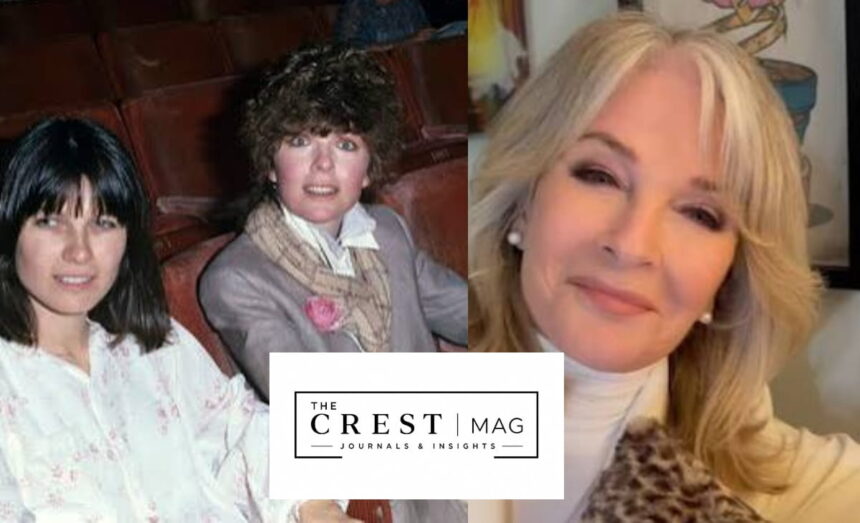
Fame does not always travel in a straight line — and the Hall family proves it perfectly. Dorrie Hall grew up in the same household as one of America’s most celebrated actresses, attended the Academy Awards at her sister’s side, and even briefly worked in the film industry. Yet she chose a path that Hollywood rarely celebrates: a quiet, grounded, private life built entirely on her own terms.
Most people have never heard her name. To those who know the Hall family story, though, Dorrie is essential — a steady anchor, a loyal sister, and a woman whose choices reflect remarkable clarity of self. Her biography offers something genuinely rare in celebrity culture: a life lived fully, without an audience.
Early Life and the Hall Family
Dorrie Hall was born on April 1, 1953, in Los Angeles, California — the youngest of four children raised by Jack Hall and Dorothy Deanne Hall (née Keaton). Jack worked as a civil engineer and real estate broker. Dorothy, a devoted homemaker, channeled her creativity into amateur photography and carefully preserved family memories in scrapbooks that became treasured household artifacts.
The family’s Southern California roots ran deep. Their home was warm, modest, and close-knit — shaped far more by family bonds than by ambitions for fame. Growing up alongside older sister Diane (born 1946), brother John Randolph Hall — known as Randy (born 1948) — and sister Robin, Dorrie experienced a childhood rich in sibling rituals and suburban rhythms.
The family eventually relocated from Los Angeles to Santa Ana, Southern California. Those quiet suburban streets and school routines became the backdrop for all four Hall children’s formative years. A seven-year age gap separated Diane and Dorrie, meaning that by the time Dorrie formed her earliest memories, her eldest sister was already developing a consuming passion for performing arts.
Diane Keaton later described her family as “loners who really were bound together” by their mother — charming and likable individually, yet somehow set apart from typical social engagement. Far from aloofness, this quality reflected a deep self-sufficiency and attachment to the family unit itself. Dorrie would carry that trait throughout her entire adult life.
A Family Shaped by Struggle and Solidarity
No honest account of Dorrie Hall’s life can skip over the shadow that touched the entire Hall family: the prolonged mental health crisis of their brother Randy. Diagnosed with bipolar disorder and schizoid personality disorder, Randy also battled alcoholism across much of his adult life and eventually developed dementia. Diane Keaton addressed his struggles openly in her memoir Brother and Sister, documenting early warning signs their parents had struggled to understand — a terror of airplanes, reluctance to leave the house, awkward social responses — during an era when mental illness carried enormous stigma.
Behind that public account, Dorrie and Robin quietly played their own roles. Diane’s memoir acknowledges both sisters as part of a family unit that worked, each in their own way, to support Randy through his darkest chapters. Dorrie never gave interviews about it. No statements, no documentary appearances, no public acknowledgment came from her side. Her contribution was simply real — and that, for Dorrie, was enough.
This pattern defines much of her story. While Diane processed the family’s pain through art, writing, and public conversation, Dorrie offered something different: consistent, unglamorous presence. She did not need an audience to show up for the people she loved.
An Invisible but Meaningful Connection to Hollywood
One of the least-known details of Diane Keaton’s origin story links her directly to her younger sister. Early in her career, Diane Hall discovered that another actress had already registered the name “Diane Hall” with the Actors’ Equity Association. A new stage name was needed urgently. During that search, she briefly considered adopting “Dorrie Hall” — her younger sister’s name — before ultimately choosing “Keaton,” their mother’s maiden name.
This detail appears rarely in retellings of Diane’s career. Its significance, however, is difficult to overstate. Reaching for her sister’s name at a moment of professional reinvention was not strategic; it was instinctive. It reveals a closeness and sense of identification between the two sisters that predated any public recognition and outlasted decades of very different adult lives.
For one brief moment, the name the world might have come to associate with Annie Hall, The Godfather, and Something’s Gotta Give could have been Dorrie’s. That it wasn’t changes nothing about the bond the gesture revealed.
Film Credits and Industry Work
Dorrie Hall is primarily known as Diane Keaton’s sister, but a brief, documented chapter in the film industry belongs to her alone. Her involvement was limited and behind the scenes — yet it was real, placing her as a participant rather than a mere observer of the world her sister helped shape.
Her first documented credit came in 1987. Diane Keaton directed Heaven, an experimental documentary exploring human beliefs about the afterlife through ordinary-person interviews and archival footage. Dorrie appeared in the film as herself — a rare step into the public record, one the documentary format enabled without demanding any professional persona from her.
A year later, she took on a behind-the-scenes role as production secretary on The Boost (1988), directed by Harold Becker and starring James Woods and Sean Young. Production secretaries coordinate schedules, manage communications, and keep the administrative machinery of a film shoot running. The work is unglamorous and entirely invisible to audiences — exactly the kind of contribution that suited Dorrie’s disposition. Contributing meaningfully without seeking credit was, by then, simply how she operated.
No further film or television credits appear in any major industry database after The Boost. Dorrie moved on from that chapter quietly, without explanation or public fanfare.
A Life Built on Personal Terms
Away from Hollywood, Dorrie built an adult life that reflects her character far more vividly than any film credit could. Antiques became her passion and her profession. She operated Monterey Garage, a stall at the Pasadena Antique Center, specializing in 1940s furniture, folk art, vintage road signs, Navajo rugs, and Southwestern treasures. Her eye for quality and authenticity earned genuine respect in that world.
Diane Keaton publicly called Dorrie her favorite antiques picker — a small but telling acknowledgment. Their adult relationship was not one of celebrity and shadow but of genuine mutual respect and shared aesthetic sensibility. Dorrie’s expertise grew entirely on its own terms, independent of her sister’s fame, and Diane recognized and relied on it.
As of 2026, Dorrie Hall is 73 years old and lives in the Los Angeles area. No verified social media presence exists for her. She has given no public interviews and maintains no public-facing professional identity. A Wikipedia page dedicated to her does not exist. None of this is accidental — it reflects deliberate choices made across many decades and maintained with impressive consistency.
Rare Public Appearances
Privacy has been Dorrie Hall’s default setting throughout her adult life, which makes her rare public appearances carry unusual weight. The most notable came in April 1978, when she accompanied Diane Keaton to the 50th Annual Academy Awards at the Dorothy Chandler Pavilion in Los Angeles. Diane attended as a nominee that evening and went on to win Best Actress for Annie Hall. Photographs from the event show Dorrie standing beside her sister — composed, present, not lingering.
More than four decades passed before her next documented public appearance. In August 2022, Dorrie attended Diane Keaton’s hand and footprint ceremony at the TCL Chinese Theatre in Hollywood, one of the entertainment industry’s most enduring traditions. Quiet and private as ever, she was simply present for a moment that mattered to her sister.
These two events — separated by 44 years — tell the complete story of Dorrie Hall’s relationship to fame. She showed up for the milestones that mattered to her family. Everywhere else, she was nowhere to be found.
The Meaning of a Private Life
Personal branding, social media performance, and the public monetization of private life define much of contemporary culture. Against that backdrop, Dorrie Hall’s biography reads as quietly radical. Growing up under the same roof as a future Oscar winner, attending glamorous Hollywood events, briefly working in film production — any of these threads could have been pulled toward a more public identity. Dorrie pulled none of them.
Significance, her life suggests, does not require visibility. People who support siblings through mental illness and hardship, who share their expertise generously with those they love, who maintain bonds across decades without seeking credit — they do some of the most important work of any life. Dorrie Hall has done all of this. Her absence from the public record is not a measure of how little she has contributed. It reflects, instead, how deliberately she has chosen to contribute on her own terms.
Conclusion
Dorrie Hall’s story, assembled from scattered public records and the accounts embedded in Diane Keaton’s memoirs, paints a portrait of someone who understood herself clearly and built a life around that understanding. Her name nearly became Diane Keaton’s stage name, also her steady presence helped anchor a family navigating serious illness. Her knowledge of antiques earned the admiration of one of Hollywood’s most respected figures, a face appeared — briefly, quietly — at two of Diane’s greatest public milestones.
None of this required a spotlight. All of it mattered.
At 73, Dorrie Hall remains as private as she has ever been. In a culture that rarely makes room to celebrate that kind of person, her story is worth telling — not because she sought recognition, but precisely because she never did.
Continue reading with this related post: From Vietnam to Hollywood: Darah Trang Untold Story of Art, Courage & Family That Will Leave You Speechless
Frequently Asked Questions
Who is Dorrie Hall?
Dorrie Hall is the younger sister of Academy Award-winning actress Diane Keaton. Born on April 1, 1953, in Los Angeles, she has two documented film credits — appearing in Heaven (1987) and working as a production secretary on The Boost (1988). She is also known as an antiques dealer who operated Monterey Garage at the Pasadena Antique Center.
Is Dorrie Hall still alive?
Yes. As of 2026, Dorrie Hall is alive and 73 years old. She continues to reside in the Los Angeles area and maintains a private life away from public attention.
What is Dorrie Hall’s relationship to Diane Keaton?
Dorrie Hall is Diane Keaton’s younger sister. Both were born Diane and Dorrie Hall respectively. Diane famously adopted “Keaton” — their mother’s maiden name — as her stage name. Notably, Diane briefly considered using “Dorrie Hall” as her professional name before settling on Keaton.
What does Dorrie Hall do for a living?
Dorrie built a career as an antiques dealer, operating a stall called Monterey Garage at the Pasadena Antique Center. She specialized in 1940s furniture, folk art, vintage road signs, Navajo rugs, and Southwestern treasures. Diane Keaton has publicly named Dorrie her favorite antiques picker.
Has Dorrie Hall appeared in any films?
Yes. She appeared as herself in Heaven (1987), a documentary directed by Diane Keaton. She also served as production secretary on The Boost (1988), directed by Harold Becker. No additional film or television credits are documented after 1988.