



Julian Ozanne is not a name you find trending on gossip pages. He does not chase fame. He does not court cameras. Yet his life reads like a novel that spans three continents, four industries, and decades of consequential work.
He is a Kenyan-born British journalist, documentary filmmaker, producer, and Africa-focused businessman. Many people first heard his name through his marriage to actress Gillian Anderson. But his story runs far deeper than that.
Julian Ozanne built his career on the ground — in African newsrooms, in war zones, in film studios, and in the forests of Uganda. He asked hard questions. He told complex stories, also he took big risks. Some paid off. Others did not.
This is the full story of Julian Ozanne.
Early Life: A Kenyan Childhood That Shaped Everything
Julian Ozanne was born in Kenya in November 1965. His birth country was still young and politically charged. Africa was changing fast. And young Julian was watching.
His childhood was unusual by any measure. He grew up in the palace of King Moshoeshoe II of Lesotho. This gave him early access to royal governance, power dynamics, and African political culture. Few future journalists could claim anything like it.
Growing Up Across Cultures
Ozanne did not grow up in a bubble. East Africa in the 1960s and 1970s offered a front-row seat to postcolonial struggle, tribal identity, and economic inequality. These realities shaped his worldview permanently.
He saw how ordinary people lived under extraordinary political pressures. He watched governments rise and fall, also he understood early that power affects people differently depending on where they stand.
This perspective became the lens through which he would later report on Africa — not as an outsider looking in, but as someone who genuinely understood the continent.
London School of Economics: Building the Foundation
In 1986, Julian graduated with a degree in Economics from the London School of Economics. The LSE is one of the world’s top institutions for economics, international affairs, and social policy.
This academic background gave Ozanne sharp analytical tools. He learned to read financial systems, understand global markets, and trace how economic decisions affect human lives. These skills would serve him well — in journalism, in film, and in business.
After graduating, he began his career in Washington, D.C., working for a Democratic congressman. Politics, power, and public policy were already central to his professional life — and he had not yet filed a single news story.
Career at the Financial Times: Reporting Africa and the Middle East
From 1987 to 1997, Julian Ozanne worked as a foreign correspondent at the Financial Times. He served as both the Middle East correspondent and the Africa Bureau Chief.
This was a decade of serious, difficult, high-stakes journalism.
War Zones and Political Conflicts
During the 1990s, he worked as a war correspondent and photojournalist. His beat included politically unstable regions across Africa and the Middle East. He traveled to dangerous places. He covered conflicts, humanitarian crises, and collapsing governments.
This work required courage. It also required patience. Accurate reporting from conflict zones is rarely fast or comfortable. Ozanne committed to it anyway.
He reported political transitions. He tracked economic upheaval, also he covered the slow, painful process of post-independence nation-building across Africa. His stories brought nuance to issues that many Western outlets reported too simply.
What Made His Journalism Different
Ozanne stood out because he combined financial insight with human-centered storytelling. Most business journalists focused on numbers. Most humanitarian journalists focused on suffering. Ozanne did both — at the same time.
He believed journalism should inform and inspire change. He wanted readers to understand not just what happened, but why it mattered.
Working With Investment Banks and Global Forums
Between 1994 and 1999, Ozanne also worked as an advisor to US and European investment banks. He focused on business and political risks in African markets. He worked alongside S.G. Warburg Group Plc and contributed to discussions at the World Economic Forum.
This dual career — reporting the news while also advising the financial world — gave Ozanne rare credibility. He understood Africa from both sides of the table.
He also became a spokesperson for the Zimbabwe Benefit Foundation, also he spoke openly against governmental oppression of Zimbabwe’s urban poor. For a journalist, this level of public advocacy was bold.
Transitioning to Documentary Filmmaking
In the late 1990s, Julian Ozanne made a major career shift. He left the Financial Times and moved into documentary film production.
In a 1999 interview, he described this as a deliberate change of direction. He said it had been very difficult. But he was ready.
Joining Bedford Square and the BBC
Ozanne joined Bedford Square, a London-based production company. He also served as associate producer on a BBC Panorama episode in 1997. This early work let him apply his journalistic skills to visual storytelling.
The move made creative sense. Ozanne had spent ten years covering stories that deserved more than newspaper columns. He wanted to show them — not just describe them.
His Key Documentaries
Also his most notable works include:
- Giorgio Armani: A Man for All Seasons (2000) — A portrait of the legendary fashion designer. Ozanne directed this film, showcasing his ability to blend cultural portraiture with sharp observation.
- This Is Not an Exit: The Fictional World of Bret Easton Ellis (1999) — A documentary on the controversial novelist. Ozanne produced this film, exploring the line between fiction and reality.
- Here to Where (2002) — A documentary released in the Netherlands, continuing his focus on global storytelling.
His Filmmaking Style
Ozanne brought a journalist’s discipline to filmmaking. He relied on observational techniques. He avoided sensationalism, also he let facts carry the weight.
His films focused on cultural portraits, social justice, and humanitarian concerns. He moved between fashion, literature, and political themes with ease. This versatility reflected his broad intellectual interests.
His filmmaking style reflects a journalist’s commitment to accuracy combined with an artist’s eye for storytelling.
New Forests Company: Vision, Leadership, and Controversy
The most complex chapter of Julian Ozanne’s career is his role at the New Forests Company (NFC). He founded NFC in 2004. He served as its Chief Executive Officer and Executive Director.
The company’s mission was ambitious. NFC aimed to create sustainable timber plantations across East Africa. It operated in Uganda, Tanzania, Mozambique, and Rwanda. It sought to combat deforestation, generate carbon credits, and create jobs.
Building a Forestry Industry in Uganda
Ozanne personally championed the project in Uganda. He oversaw the planting of more than 14 million pine and eucalyptus trees. He created employment for more than 1,400 people, also he spoke passionately about African forestry as a long-term solution to climate change.
In June 2018, Ozanne described NFC as a major opportunity to help Africa address climate change through sustainable forestry investment.
The Oxfam Report and Human Rights Concerns
In 2011, Oxfam published a damning report on NFC’s operations in Uganda. The findings were serious and specific.
Between 2006 and 2010, more than 10,000 people lost their land in the Mubende and Kiboga districts. Farming families reported violence. Their crops and livestock were destroyed. They received no adequate compensation. They had no alternative land.
Oxfam’s Executive Director stated that the Ugandan case clearly showed how land grabbing slips through the net of existing safeguards.
The New York Times also reported on the evictions. The story reached global audiences. The reputational damage to NFC was severe.
NFC’s Response and Suspension
NFC denied wrongdoing by its employees. The company said the settlers were illegal encroachers. Ugandan authorities had licensed NFC’s operations and permitted the evictions.
Later dispute-resolution processes involved communities, the company, and outside organisations. But the damage was done.
NFC subsequently suspended operations. Ozanne released a statement acknowledging the human cost. “Having planted millions of trees annually for the past six years and led the creation of a modern Ugandan forestry industry, we are sad to suspend tree-planting and laying off workers, forcing people back into poverty,” he said.
The suspension came amid a $14 million loss by a key investor and the withdrawal of additional World Bank financing.
Lessons from the NFC Chapter
The NFC episode is a cautionary tale. It shows how development projects can cause harm — even when the environmental intentions are genuine. For a man who built his reputation on holding power to account, finding himself at the center of a human rights controversy must have been deeply challenging.
This part of his history matters. It adds moral complexity to his story. It shows that ambition and good intentions are not enough.
Personal Life: Marriage to Gillian Anderson
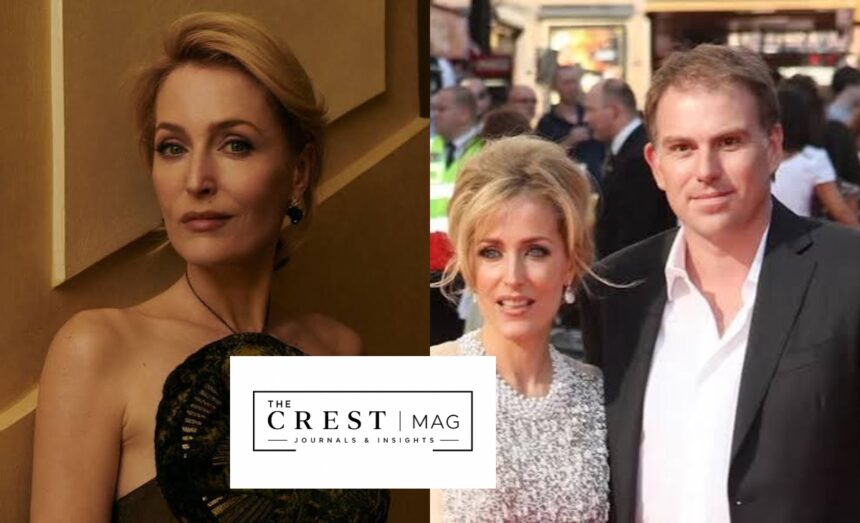
Julian Ozanne met Gillian Anderson in Kenya during a safari. She was one of the most famous actresses in the world — known globally for playing FBI Agent Dana Scully in The X-Files.
They began dating in 2002. They married on December 29, 2004, in the village of Shella on Lamu’s Island, off the Kenyan coast. Anderson’s daughter Piper served as bridesmaid.
A Short but High-Profile Marriage
The marriage lasted only 16 months. They separated in April 2006 and divorced in 2007. They did not have children together.
Ozanne has kept his personal life private since the divorce. He has not publicly discussed other relationships. Anderson went on to further acclaimed roles and later spoke openly about her personal life in interviews and a memoir.
Despite the media attention that came with marrying a famous actress, Ozanne never courted celebrity. He remained focused on his work throughout.
Advocacy, Activism, and Broader Influence
Beyond journalism, film, and business, Julian Ozanne has maintained a consistent thread of social activism throughout his career.
Zimbabwe Benefit Foundation
As a spokesperson for the Zimbabwe Benefit Foundation, Ozanne used his platform to highlight the plight of Zimbabwe’s urban poor under political oppression. He was not afraid to name governments and call out injustice publicly.
World Economic Forum
His participation in World Economic Forum discussions connected him to global conversations about sustainable growth and social responsibility. He contributed practical knowledge about African markets and development finance.
Democratic Progress Institute and Other Roles
UK Companies House records list Ozanne as holding multiple company appointments. These include roles at Sun Biofuels, Democratic Progress Institute, Zimbabwe Benefit Foundation, A.W.O.L Music Limited, Maxland Management, and Marquee Film and Television Productions.
This breadth of engagement reflects a man who does not stay still. He moves across sectors. He finds new challenges, also he keeps building.
Julian Ozanne’s Professional Legacy
Julian Ozanne’s career offers something rare — a genuine example of how journalism can evolve without losing its ethical core.
He moved from print to film to business and back, also he covered Africa with depth when most Western journalists barely visited. He made films about cultural figures most documentarians ignored, also he tried to build a forestry industry in East Africa — and learned painful lessons when it went wrong.
His story is not simple. It is not all success. But it is honest. And for a man who spent decades arguing that journalism must be honest above all else, that feels fitting.
Today, Ozanne continues to encourage cross-border cooperation in green finance, supports African storytelling through documentaries, and advises young filmmakers working on social issues. His estimated net worth sits between $1 million and $5 million — modest by celebrity standards, but built across decades of serious professional work.
Conclusion
Julian Ozanne is a complicated, accomplished, and genuinely interesting figure. He defies easy labels, also he is not just a journalist. He is not just a filmmaker, also he is not just a former husband of a famous actress, also he is all of these things — and more.
His life began in the palaces of Lesotho and the landscapes of Kenya. It ran through the newsrooms of the Financial Times, the film sets of London, and the contested forests of Uganda. It touched war zones, investment banks, film festivals, and humanitarian campaigns.
Some chapters of his story are inspiring. Others are uncomfortable. But all of them are real — and all of them matter.
In a media world full of shallow celebrity, Julian Ozanne represents something harder to find: a person who engaged seriously with the world, paid real costs for his choices, and kept moving forward.
That is a story worth knowing.
Explore more by reading this related post: Dina Eastwood: The Reporter Who Stole Clint Eastwood’s Heart (And Built a Life Beyond Him)
Frequently Asked Questions
Who is Julian Ozanne?
Julian Ozanne is a Kenyan-born British journalist, documentary filmmaker, producer, and businessman. He is best known for his work as Africa Bureau Chief at the Financial Times, his role as founder and CEO of New Forests Company, and his former marriage to actress Gillian Anderson.
When and where was Julian Ozanne born?
Julian Ozanne was born on November 30, 1965, in Kenya. He spent part of his childhood in the palace of King Moshoeshoe II of Lesotho before moving to the UK for higher education.
What documentaries has Julian Ozanne directed or produced?
His notable documentary works include Giorgio Armani: A Man for All Seasons (2000), This Is Not an Exit: The Fictional World of Bret Easton Ellis (1999), and Here to Where (2002). He also served as associate producer on a BBC Panorama episode in 1997.
Why did Julian Ozanne and Gillian Anderson divorce?
Julian Ozanne and Gillian Anderson separated in April 2006 after roughly 16 months of marriage. Their divorce was finalised in 2007. Reports cited incompatible marital differences. Neither party made detailed public statements about the reasons.
What happened to the New Forests Company in Uganda?
New Forests Company, founded by Julian Ozanne in 2004, faced serious controversy in Uganda. Oxfam reported in 2011 that over 10,000 people were evicted from land in Mubende and Kiboga districts to make way for NFC’s tree plantations. The evictions caused significant hardship. NFC denied wrongdoing, but later suspended operations following financial losses and reputational damage.